The Magic Man Who Took India to the World
News: By: Sharan Kumar
August 28 , 2026 |
|
| |
Indian racing has rarely ventured beyond its own borders, but Suraj Narredu has spent much of his remarkable career doing exactly that. From America and Australia to Ascot and Japan, India’s most successful jockey has repeatedly sought opportunities to test himself against the world’s best. In the process, he has not only expanded his own horizons but also given Indian racing an international presence it has long lacked.
Indian racing has never received the international recognition it deserves. For all the horses imported from Europe and America, for all the Indian owners who regularly shop at Goffs and Tattersalls, and for all the interest that exists in Indian bloodstock, racing in India remains largely a localized sport.
The reasons are not difficult to identify. Indian authorities have been reluctant to open the country’s major races to foreign participation. Whether the resistance comes from breeders seeking protection, regulatory concerns or simply a lack of vision is a matter for debate. Whatever the reason, the consequence is the same: Indian racing rarely gets the international exposure that its scale and history warrant.
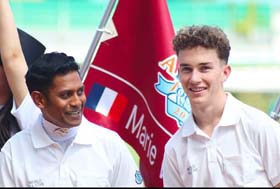
Against that backdrop, Suraj Narredu has been a breath of fresh air. The hugely ambitious and supremely talented jockey did something that Indian racing itself has often been reluctant to do. He crossed the boundaries and, in doing so, carried the Indian flag into some of the world’s most important racing jurisdictions.
|
|
| |
Suraj studied at Sindhi High School before completing his Bachelor of Commerce, but his real education as a jockey came on racecourses around the world. More than a decade ago, he rode a winner at Arlington in the United States and subsequently rode successfully in Macau and Mauritius before making a particularly strong impression in Australia. Suraj himself believes that his Australian experience sharpened him as a jockey and prepared him for the international opportunities that followed.
But Australia was only one part of an international education that Suraj consciously sought out. “I have been very lucky to work with some of the best trainers around the world, even if they were short stints,” he says. In Australia, he had the opportunity to work with Gai Waterhouse and Adrian Bott, as well as Ciaron Maher and David Eustace, who has since moved to Hong Kong. In Britain, he spent time with John Gosden, Charlie Appleby and Marco Botti, while in Ireland he worked with Aidan O’Brien, Joseph O’Brien, Dermot Weld and John Oxx.
Most of these associations lasted only a few days, but Suraj never regarded them as casual visits. Each was an opportunity to observe, absorb and bring something back to India. “They were all a learning experience. I always tried to bring back something from there and inculcate it in our stables,” he says.
That philosophy explains much about Suraj's international journey. His idea was to ride outside India during the off-season every year, not simply to remain race-fit but to learn something new. It could be from a trainer, another jockey, the way horses were handled or even the racing culture of the country he was visiting. Rather than spend the off-season waiting for racing to resume in India, he used the opportunity to put himself in unfamiliar surroundings and learn from people operating at the highest level.
“Until recently I did not realise that I had actually ridden in quite a few places,” he says. Yet despite the growing list of countries in which he has ridden, Suraj remains hungry for more. Hong Kong, South Africa, Canada and several European countries, including Germany, Italy and Sweden, remain on his list. “I still feel there are so many places that I have to go and ride and explore. Till I do a few more of them I will not fully feel at peace.”
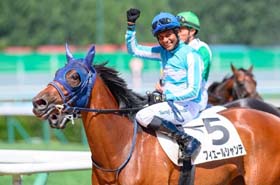
That restless curiosity may be the quality that best defines Suraj Narredu. A jockey who has established himself in India can quite easily remain within the comfort of familiar horses, tracks, trainers and racing patterns. Going abroad means surrendering much of that security and often having to prove oneself again. Suraj has repeatedly chosen that challenge, willing to sacrifice the prospect of riding assured winners at home for the opportunity to slog it out in foreign countries and learn. It is this spirit of adventure, combined with an insatiable hunger to achieve, that has driven his international career.
Those opportunities have now become a remarkable part of his story. Suraj is India's record holder for winners, with more than 2,500 victories, and has ridden more than 100 Classic winners. Those figures alone establish him among the greatest jockeys India has produced. But statistics tell only part of the story. His greater achievement has been to make Indian racing visible beyond India.
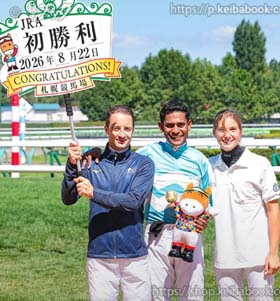
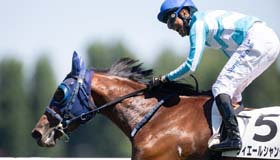
At Ascot, riding for the Asian team in the Shergar Cup, Suraj helped his side win the championship and himself rode a winner. He returned to Ascot again this year, invited to participate once more among some of the finest riders in the world. Then came Japan, where Suraj became the first Indian jockey to ride a winner, creating a piece of history that went well beyond an individual race result.
|
|
| |
The Japanese press christened him the “Magic Man of India”, while television channels in England interviewed him extensively, giving Suraj an opportunity to explain Indian racing to an audience that otherwise has little exposure to it. For once, an Indian representative in an international racing arena was not merely participating. He was being noticed, and through him, Indian racing was being noticed as well.
The reception in Japan left a particularly deep impression on him. “The treatment in Japan was simply amazing. The Japanese racegoers gave me tremendous support, waving the Indian flag. I signed autographs for more than 100 people, something I enjoyed immensely because it is something we rarely get in India, where cricketers walk away with all the adulation.”
There was more to that experience than personal recognition. Suraj understood what it meant for a sport when its participants were treated as stars. When jockeys, trainers and horses become figures that people want to meet and celebrate, young people take notice, new participants are attracted and the sport acquires glamour and aspiration. Racing becomes more than something that happens behind the grandstand; it becomes a sport that people want to identify with. That is precisely the kind of wider public recognition Indian racing has struggled to create.
Suraj also had the privilege of riding alongside Japanese legend Yutaka Take, now 57, whose extraordinary longevity and ability continue to inspire. He received a good-luck message from Frankie Dettori and found himself among English champion jockeys, officials and stipendiaries who made the visiting riders feel important. For an Indian jockey, these experiences cannot be measured merely in terms of prize money or winners because they represent exposure to a racing culture that operates on a very different scale.
Suraj's international journey has therefore given a different perspective to his extraordinary domestic record. More than 2,500 winners and over 100 Classic victories are staggering numbers in themselves, but when those achievements are placed alongside winners in America, Macau, Mauritius and Australia, a Shergar Cup championship, an Ascot victory and a historic Japanese success, they acquire another dimension. He is not simply India's most successful jockey; he is one of the very few Indian jockeys who has repeatedly tested himself against the world and returned with something to show for it.
His story, however, remains deeply rooted in Indian racing. Suraj comes from a family for whom racing is not merely a profession but a way of life. His father and uncle have each ridden more than 1,000 winners and have also enjoyed considerable success as trainers. His brother Rajesh Narredu is a successful trainer, while several cousins have taken up riding at different racing centres.
It would be difficult to imagine a Narredu family dinner where racing does not dominate the conversation. Which horse should be ridden, which race should be targeted, how a horse should be placed, what tactics might work and how to strategize for a Classic would probably be more natural dinner-table conversation than anything remotely resembling ordinary family chatter. For the Narredus, racing is not simply what they do; it is what they live and breathe. They can legitimately be described as India's first family of racing, with generations of the family contributing to the sport in the saddle and in the training yards.
Suraj, however, has taken that family legacy somewhere no Narredu had gone before. He has carried it beyond India's borders and, in the process, carried Indian racing with him. That may ultimately prove to be his most enduring contribution.
Indian racing has produced champions, great horses, outstanding trainers and jockeys of exceptional ability. What it has lacked is a sustained international presence. Suraj Narredu has supplied one, not because he set out to become an ambassador for Indian racing, but because his own ambition and curiosity repeatedly took him beyond the familiar.
As a youngster, he dreamed of riding in the great racing centres of the world and experiencing the recognition enjoyed by international jockeys. He has now lived much of that dream, but he clearly does not regard the journey as complete. There are still countries he wants to visit, trainers he wants to learn from, racing cultures he wants to experience and tracks on which he wants to test himself.
That is perhaps what separates Suraj from the conventional definition of a successful jockey. His achievements at home would have been enough to make him a legend of Indian racing, yet he has consistently been willing to leave the security of that success behind for the uncertainty and challenge of foreign racing. He has not travelled simply to add countries to his résumé. He has travelled to learn, to compete and to discover how much further he can go.
And perhaps Indian racing should recognise what that ambition represents. While the authorities continue to debate how much of the world should be allowed into Indian racing, Suraj Narredu has quietly done the opposite. He has taken India to the world, and wherever he has gone, he has carried with him not only the reputation of an exceptional jockey but a glimpse of what Indian racing can produce.
|
|
|
|
|