| |
Matheran does not announce itself with trumpets. It rises quietly, a green shoulder of the Sahyadris, wrapped in forest, mist, and an old-world courtesy that refuses engines and impatience. No cars honk here, no bicycles rush past. You arrive on foot, or swaying gently on a pony, the way travellers have for generations. And somewhere between those red mud paths and the slow rhythm of hooves, Indian horse racing found one of its purest nurseries.
Tourism in Matheran has always leaned on horses the way vines lean on old stone. Nearly 400 ponies work the hill every day, carrying visitors along shaded trails, to viewpoints where the valleys fall away like a held breath finally released. For many visitors, it is a joy ride. For the local youngsters, it is an apprenticeship in instinct.
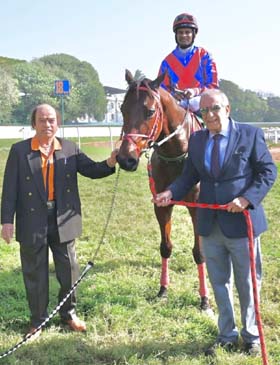
Boys grow up riding bareback, hands light, balance learned before fear. Horse and rider know each other not by instruction but by habit and trust. This early companionship has quietly shaped some of Indian racing`s finest talents. Matheran does not produce jockeys in classrooms. It grows them on hillsides.
India`s greatest jockey, Vasant Shinde, came from here. Long before the glare of big tracks and bigger prizes, he earned his living plying ponies, climbing the very paths tourists now stop to photograph. Today`s champion jockey, Sandesh, traces his roots to the same soil. So do many others whose names may not always sit in bold type but are firmly etched into the sport: Ravi Biramne, Pramod Beluse, Satish Naik, Sushil Ranjane, Shailesh Shinde, G Santosh and many more. Each learned their craft first on mud and gradient, not manicured turf. That tradition now travels beyond India, with several boys from Matheran currently riding and honing their skills in England and Ireland.
For nearly 75 years, Matheran also shared a special bond with Mumbai`s amateur racing scene. When the professional season ended, the amateurs took over. Flat races were run for the love of it, and youngsters from Matheran would come down to ride. Those races were a bridge between hill ponies and racehorses, between raw talent and refined skill. Many crossed that bridge and never looked back.
Then, quietly and without ceremony, the bridge was closed. Amateur flat racing in Mumbai stopped over a decade ago. An easy ending, one might have thought. But Matheran has never waited for permission to keep its traditions alive.
Instead, the horse owners and riders did something rather wonderful. They built their own answer.
At Kalamb, near Neral, at the foothills of the very hills that shaped them, they carved out a mud track. No grandstands, no gloss. Just honest racing. With the help of a generous sponsor, they staged nine short races, each about three furlongs. At the end came the plum, a champion`s race where the winners faced off for pride and prize money that would make even city racing take notice: ?1 lakh to the winner, and meaningful rewards down to fifth place.
What truly stole the show was not the purse, but the people. Villagers and locals turned up in numbers that would shame many a professional race day. Families, elders, children on shoulders, all lining the track, eyes fixed on the dust and thunder of hooves. Racing, stripped of ceremony, returned to its oldest purpose: community and courage.
Many jockeys, after careers spent under city lights, return to Matheran. They open small hotels, stable their lives where they began, and gently nudge their children toward the saddle. The cycle continues. From tourist pony to racehorse rider. From hill path to finish post.
As professional racing in India wrestles with uncertainty, places like Matheran offer a reminder. The sport does not survive on betting windows alone. It survives on touch, tradition, and talent discovered young. As long as children climb these hills bareback, Indian racing will never truly run out of jockeys.
Matheran, in its quiet, horse-hoofed way, keeps the flame alive.
|
|



 Top
Top
