| |
A month-long exposure programme with Racing Victoria during the 2026 Melbourne Spring Carnival offered an Indian racing official with over three decades of experience a rare opportunity to study Australian racing at close quarters. From race administration and integrity management to the spectacular Melbourne Cup, the experience provided valuable professional insights and a fresh perspective on how Indian racing could improve its systems, broaden public appeal and promote its flagship events.
The 166th running of the Melbourne Cup at Flemington on Tuesday produced a memorable result, with trainer Ciaron Maher achieving a historic one-two-three in Australia`s most prestigious race. Point Of Law, ridden by Ethan Brown, justified favouritism in the $10.2 million Group 1 contest over 3200 metres, producing a powerful late burst to overhaul the long-time leader Royal Supremacy and win by 3¾ lengths. Zahrann finished second and Juja Kibo third, completing a remarkable trifecta for Maher. Royal Supremacy eventually finished fifth, while Sons And Lovers, trained by Joseph O`Brien, took fourth place. Point Of Law, formerly owned by King Charles III and Queen Camilla, had earlier won the Geelong Cup, adding another distinction to his success. The victory was Ethan Brown`s first in the Melbourne Cup and another significant milestone in Maher`s training career.
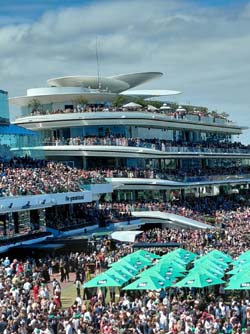
The Melbourne Cup, however, was only the culmination of a much wider experience for me as an Indian racing official with over three decades of experience. My month-long stay in Australia was part of an exposure programme organised by Racing Victoria during the 2026 Melbourne Spring Carnival.
The programme offered first-hand exposure to the systems and practices underpinning Australian racing. It included visits to various racecourses, morning trackwork sessions, jump-outs and an insight into the extensive preparations required to conduct racing at the highest level.
One of the most rewarding aspects was interacting with officials from Racing Administration, Stewards, Handicapping, Veterinary and Starting Gates. Spending race days alongside the Stewards team and observing racing enquiries provided valuable insights into Australia`s regulatory framework, protocols and procedures.
Howden Victoria Derby Day at Flemington was spectacular. A crowd of approximately 86,000, dressed predominantly in black and white, created a magnificent atmosphere. The fashion, hospitality, private marquees, food, music and entertainment demonstrated how racing could become a major social and sporting celebration.
Melbourne Cup Day, popularly known as the `Race That Stops a Nation`, offered an even greater appreciation of the extraordinary public following enjoyed by racing in Australia. The enormous participation, seamless organisation and attention to detail were impressive. It was a striking illustration of how a major racing event could bring together the racing fraternity and the wider community.
Beyond the spectacle, the exposure to race-day operations, integrity management, handicapping practices and veterinary procedures was professionally rewarding. Interactions with Australian racing personalities and officials provided valuable perspectives on the challenges of administering a modern racing jurisdiction and maintaining international standards.
I am sincerely grateful to Racing Victoria, the Stewards team and all the officials who planned and facilitated the programme. What began as an opportunity to observe international racing developed into a month of professional interaction, learning and unforgettable memories.

For Indian racing, such exposure programmes are particularly significant. Understanding how another major racing jurisdiction approaches administration, regulation, integrity and race-day management offers lessons that extend well beyond the racecourse. The real value lies in absorbing these practices and identifying those that can be adapted to Indian conditions.
Perhaps the biggest lesson I took away was the importance of promoting a major race well in advance. Publicity for the Melbourne Cup does not begin a few days before the event. It is a year-round exercise, with anticipation building steadily and culminating in the big day. By then, racing enthusiasts and members of the public have made their plans well in advance. Securing a place inside or even outside Flemington becomes a coveted experience.
Not everyone gets to watch the race from a private marquee or a prime viewing enclosure, but that does not diminish the attraction. The atmosphere, fashion, entertainment and sheer excitement of being part of the occasion are attractions in themselves. People are willing to spend considerable time and money simply to be associated with the event.
The Indian Derby, which already enjoys a fine following, could be promoted along similar lines. There is considerable scope to build anticipation through sustained publicity and a calendar of promotional activities rather than treating it as a one-day event. Such an initiative would bring a wider cross-section of society to the racecourse and introduce people unfamiliar with the sport to its many facets. This would also help dispel the perception that horse racing is merely about gambling.
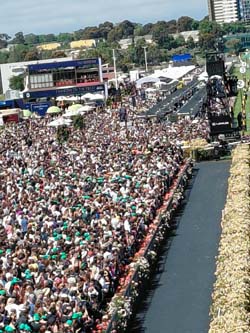
However, attracting first-time visitors is only half the job. The authorities must ensure that their first experience is rewarding. Visitors need to be welcomed, guided and given an understanding of the proceedings. They should not be left to find their own way through the crowds, unable to comprehend what is happening around them. A well-organised visitor experience, supported by information, hospitality and entertainment, can make all the difference.
The Melbourne Cup has demonstrated that a great race can become much more than a sporting contest. With sustained promotion, public participation and thoughtful organisation, it can become a celebration that captures the imagination of an entire nation. Indian racing has much to learn from that example.
|
|



 Top

